






How to Plan a Happy Hour
Your Team Will Love Attending
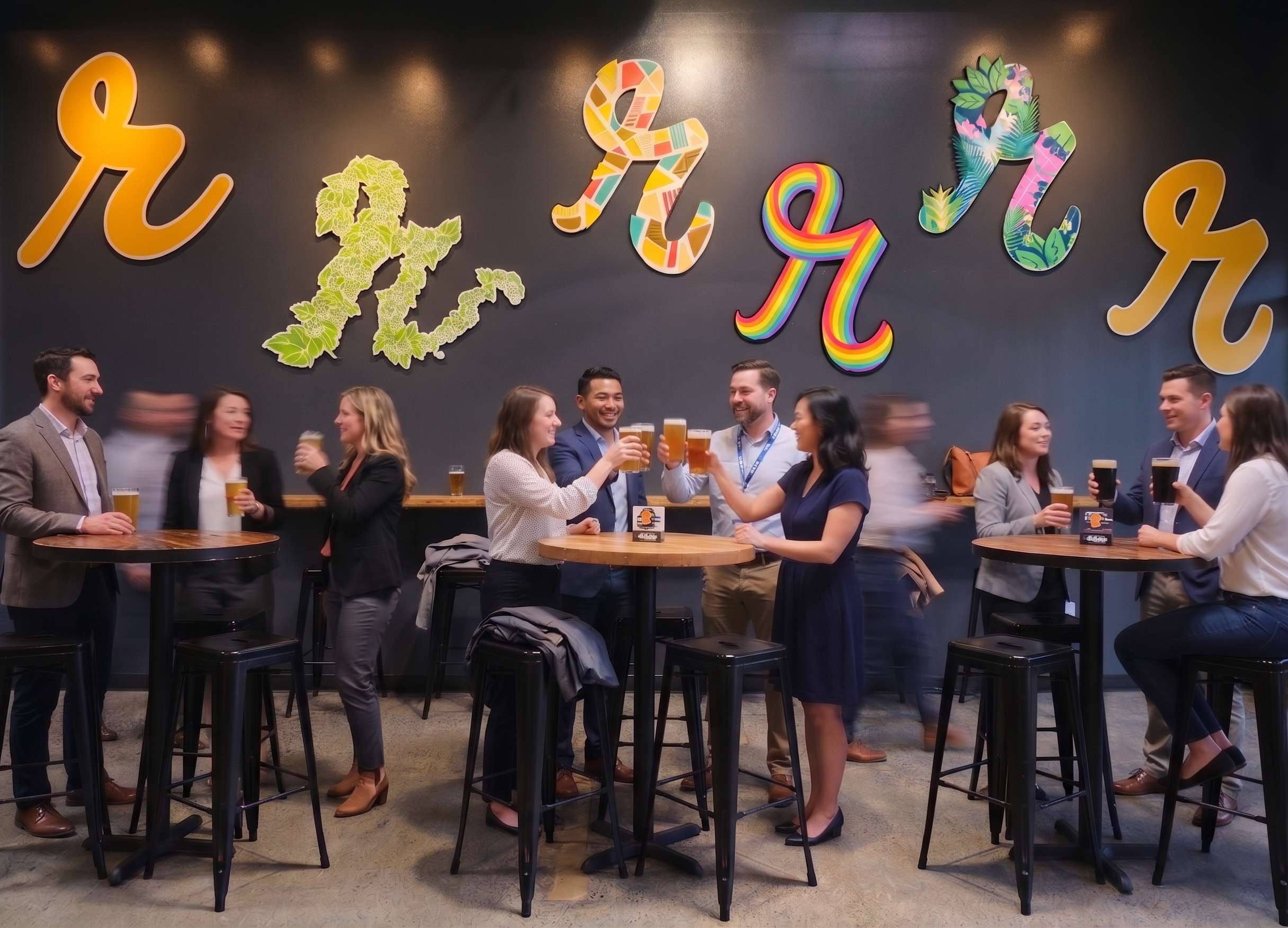
We host dozens of corporate happy hours every quarter across our two Seattle locations, and I can tell you the single biggest predictor of whether one is good or not: did anyone think about it for more than five minutes before booking?
That sounds harsh. It’s not meant to. The problem is that most corporate happy hours get planned the way people plan a dentist appointment — find a date, find a spot, send an invite. But the venue matters way more than the invite. Pick the wrong one and people bail after one drink. Pick the right one and you’ll have managers asking when the next one is.
Here’s what we’ve learned watching these things go well and go badly.
Figure Out What It’s Actually For
Before you book anything, be honest about the goal. The answer changes everything.
If it’s team bonding after a hard sprint, you want a relaxed space where people can move around and find their own conversations. If it’s client entertainment, you want a venue that reflects well on the company. If it’s celebrating a close or a launch, you want something that feels like a reward, not a conference room with beer. If it’s onboarding new hires, you want a space where the quiet folks aren’t trapped in a corner.
Once you know the goal, the rest gets easier.
The Happy Hour Headcount Math Everyone Gets Wrong
The most common mistake we see: planners book a space sized for the invite list, not the actual turnout. For a standard weekday corporate happy hour in Seattle, expect 60 to 75 percent of your invited headcount to show up. Higher if you’re providing food, lower if it’s purely optional.
At our Ballard taproom, one of our private spaces holds about 40 seated or around 75 standing. Another holds up to 150+. Our Downtown Seattle location — just a few blocks from the waterfront and most of the financial district offices — scales up for larger buyouts. If your group is under a dozen, you probably don’t need a buyout at all. A reserved section keeps the energy of a full room without paying for space you don’t need.
Weekday Is the Secret Weapon
Friday happy hours are the default, which means they’re also when every other company is booking. If you want a quieter venue, better service, and usually a better price, look at Tuesday through Thursday. Wednesday is the sweet spot — it breaks up the week and doesn’t compete with weekend plans.
One thing we’ve noticed: a 4:30 start beats a 5:00 start. It lets the commuters still catch their train or ferry, and counterintuitively, the earlier you start, the longer people stay.
Food Is the Difference Between Two Drinks and an Evening
Every corporate happy hour planner eventually learns this: drinks without food end at drink two. Food keeps people present.
We run a full kitchen at both taprooms with options that work for groups — shareables, and main options for more formal events. Rough rule of thumb: budget one appetizer or small plate per person per hour. For a two-hour happy hour with 40 people, that’s 80 shareable items. Sounds like a lot. It is. It’s also what separates a great event from one people leave hungry.
What This Actually Costs
Most companies we work with budget somewhere between $20 and $50 per person for two hours with drinks and food. The variables are food quality, drink format, and whether you want a reserved section or a private space.
A few patterns that work:
An open tab — with people knowing they can have two drinks each — plus a food package is the most common structure. Controls cost and avoids the awkward moment where someone orders a $9 barrel aged beer on the company card. Open tab with a cap works well for smaller, senior groups. Full cash bar works for very large events where you want guests to pay for extras beyond a couple of provided drinks.
Why Our Taprooms Work for Happy Hours
I’ll make the case for us, but I’ll keep it honest. Our taprooms were designed with groups in mind — not as an afterthought. Private event spaces, high energy spaces, a dedicated events team, and the ability to handle groups from a dozen to a few hundred.
Our Ballard location has the neighborhood taproom feel — great for teams that want something casual and unbuttoned. Downtown is closer to most corporate offices and works better for client-facing events.
If you’re comparing options, the Seattle corporate event scene has a lot of good choices. Hotel bars are polished. Restaurant private dining rooms are intimate. Dedicated event halls like give you a blank canvas. A taproom like ours is energetic and low-pressure, which tends to be what people actually want after a long workday. Different tools for different jobs.
Questions to Ask Before You Book Anywhere
These should be easy for any venue to answer, and they’ll save you a headache if you ask upfront:
What’s the rental rate? Is there a minimum spend, and does food count toward it? Is there a private or semi-private area? Is parking or transit accessible? Who’s the day-of contact and how reachable are they? What’s the cancellation policy?
Ready to Plan Your Corporate Happy Hour?
Tell us the date, headcount, and what kind of evening you’re going for, and we’ll send back options for both Ballard and Downtown. Weekday corporate bookings are our specialty. We can usually confirm availability within a business day.
Book your corporate happy hour
